
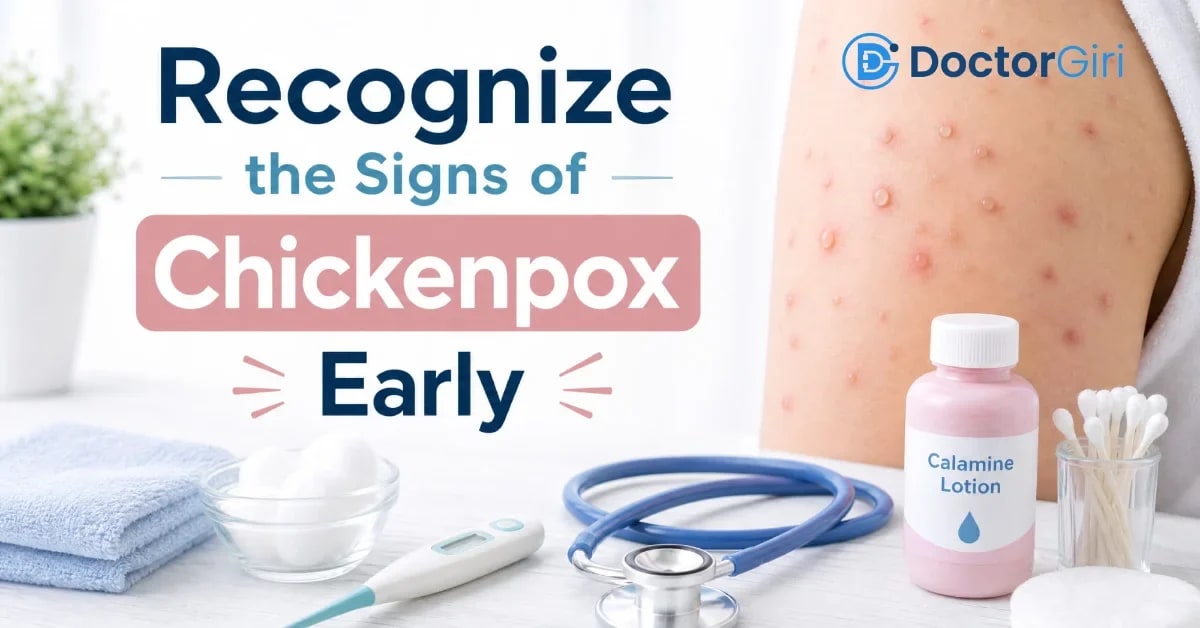
Chickenpox (Varicella)
Chickenpox, also called varicella, is a highly contagious viral illness that causes an itchy, blister-like rash. It is caused by the varicella-zoster virus (VZV). Chickenpox is most common in children, but anyone who has not had the disease or been vaccinated can get it. Thanks to vaccination, cases have dropped dramatically worldwide.
If you or your child develops symptoms, especially a widespread itchy rash with fever, contact your healthcare provider.
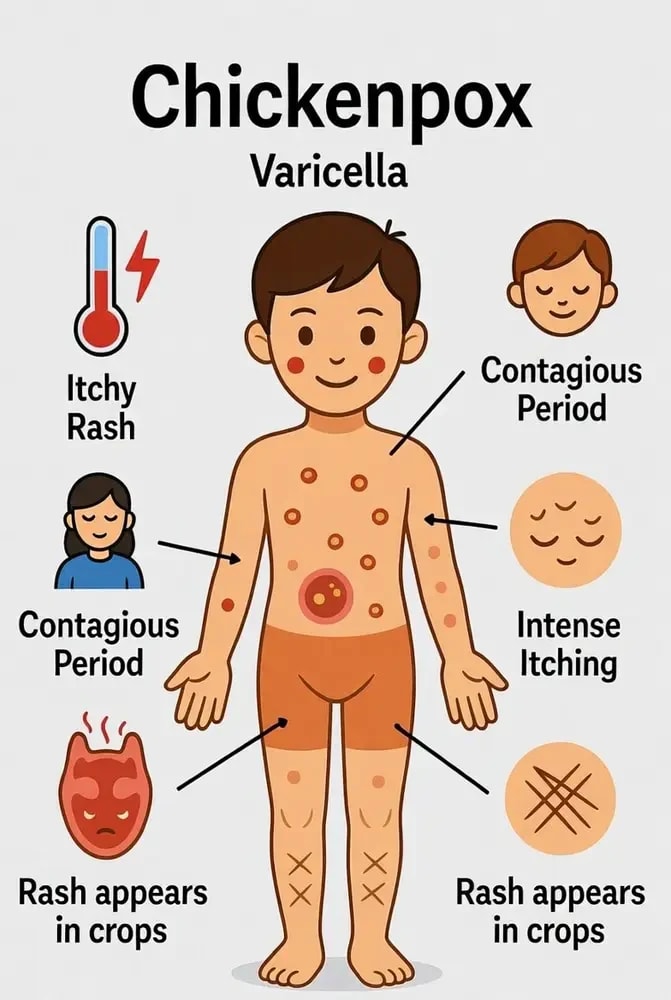
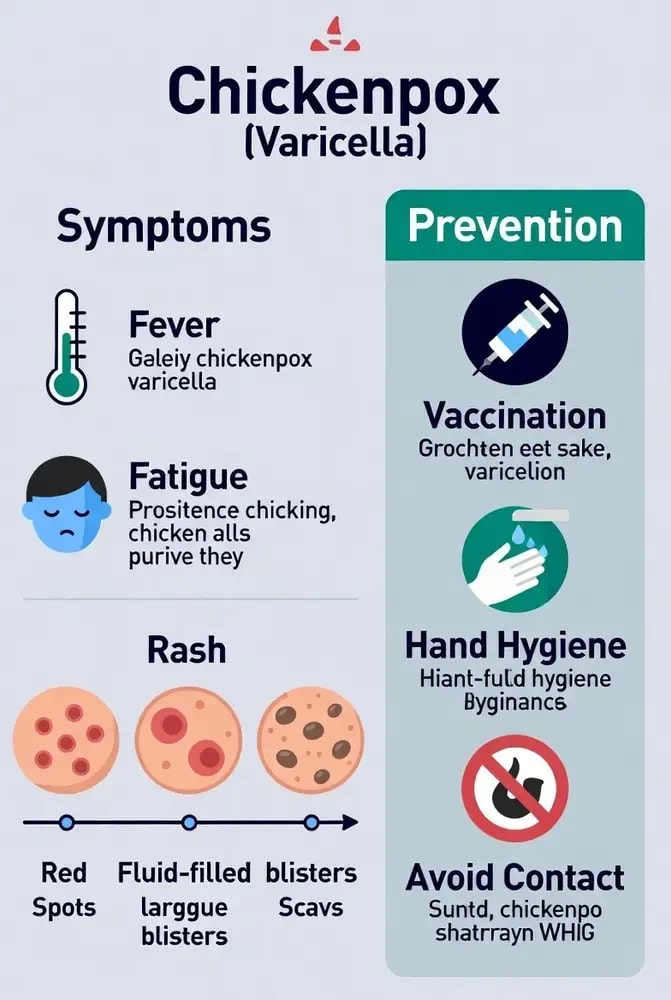
(These images show the typical chickenpox rash progression: red spots turning into fluid-filled blisters and then scabs.)
Symptoms and Causes
Symptoms of chickenpox
Symptoms usually appear 10–21 days after exposure (most often 14–16 days). Many people have mild symptoms, but the illness can be more serious in adults, infants, pregnant people, or those with weakened immune systems. Common symptoms include:
- Low-grade fever
- Tiredness or fatigue
- Loss of appetite
- Headache
- Itchy rash that starts as small red spots, turns into fluid-filled blisters, and then forms scabs
The rash often begins on the face, scalp, or trunk and spreads to the rest of the body. New spots continue to appear for several days, so you may see different stages (spots, blisters, and scabs) at the same time. The rash usually lasts 4–7 days, and most people recover within 1–2 weeks.
Causes of chickenpox
Chickenpox is caused by the varicella-zoster virus (VZV). Here’s how it spreads:
- The virus spreads easily through respiratory droplets when an infected person coughs or sneezes.
- It also spreads by direct contact with the fluid from chickenpox blisters.
- A person is contagious from 1–2 days before the rash appears until all blisters have crusted over.
- The virus can remain in the body after recovery and later reactivate as shingles (herpes zoster) in some people.
Risk factors
People at higher risk for complications include infants, adults, pregnant individuals, and those with weakened immune systems.
Diagnosis and Tests
Healthcare providers usually diagnose chickenpox based on the characteristic rash. In uncertain cases, they may order a blood test or swab from a blister to confirm the varicella-zoster virus.
Management and Treatment
There is no specific cure for chickenpox. Treatment focuses on relieving symptoms:
- Get plenty of rest and drink fluids
- Use calamine lotion, cool baths (with baking soda or colloidal oatmeal), or antihistamines to reduce itching
- Take acetaminophen (paracetamol) for fever and discomfort
- Do not give aspirin to children or teenagers — it can cause Reye’s syndrome
- Antiviral medicines (such as acyclovir) may be used for severe cases or people at high risk
Keep fingernails short and avoid scratching to prevent skin infections.
Outlook / Prognosis
Most healthy children recover fully from chickenpox without long-term problems. Complications are rare but can include skin infections, pneumonia, or encephalitis (brain inflammation). People who have had chickenpox usually develop lifelong immunity, though the virus can reactivate later as shingles.
Prevention
The best way to prevent chickenpox is vaccination. The varicella vaccine is safe and highly effective. Children typically receive two doses: one at 12–15 months and a second at 4–6 years.
Additional steps include:
- Avoiding close contact with people who have chickenpox or shingles if you are not immune
- Staying home until all blisters have crusted over
Sources: Information adapted from World Health Organization (WHO) resources on chickenpox/varicella and U.S. Centers for Disease Control and Prevention (CDC) chickenpox pages.