
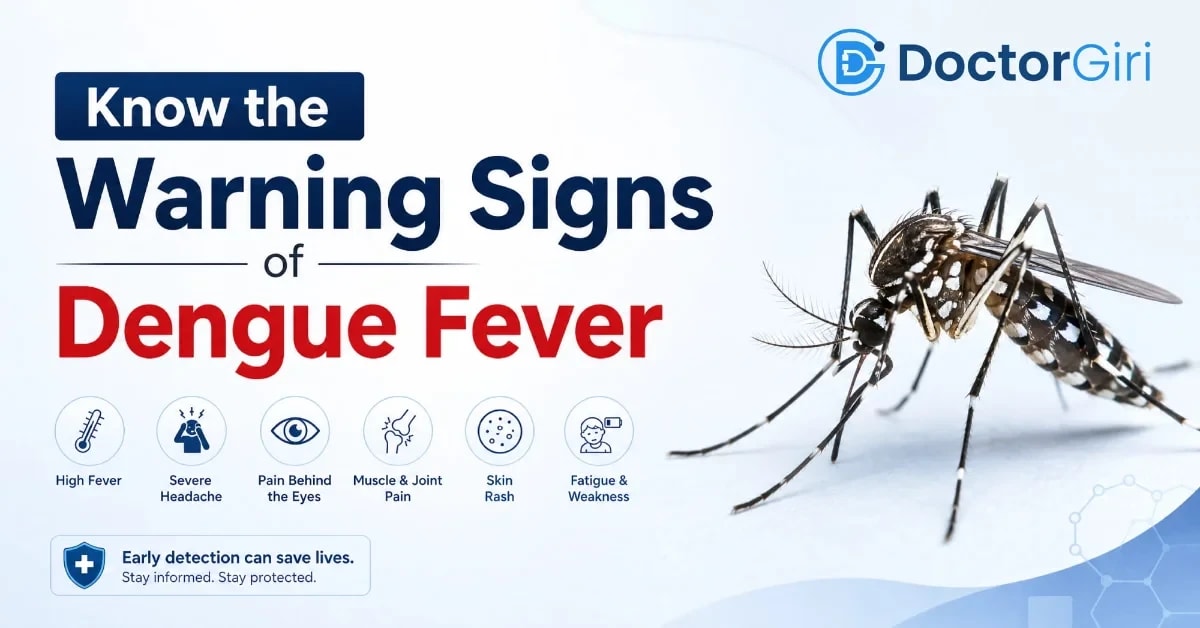
Dengue Fever
Dengue fever is an illness you can get when an infected mosquito bites you. Four types of dengue virus (DENV-1 to DENV-4) can cause it. The virus is most common in tropical and subtropical regions, including parts of Asia, Africa, Central and South America, and the Pacific Islands. Many people have mild or no symptoms, especially during their first infection. However, about 1 in 20 people can develop severe dengue, which can be life-threatening.
If you live in or are visiting an area where dengue is common (including many parts of Bangladesh), get immediate medical attention for signs of severe dengue.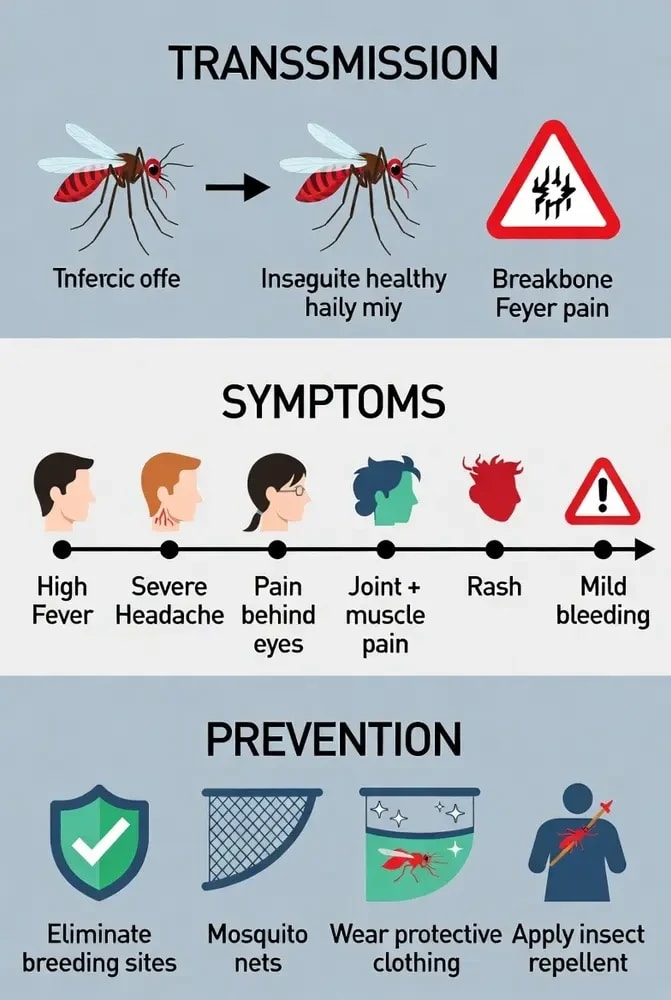
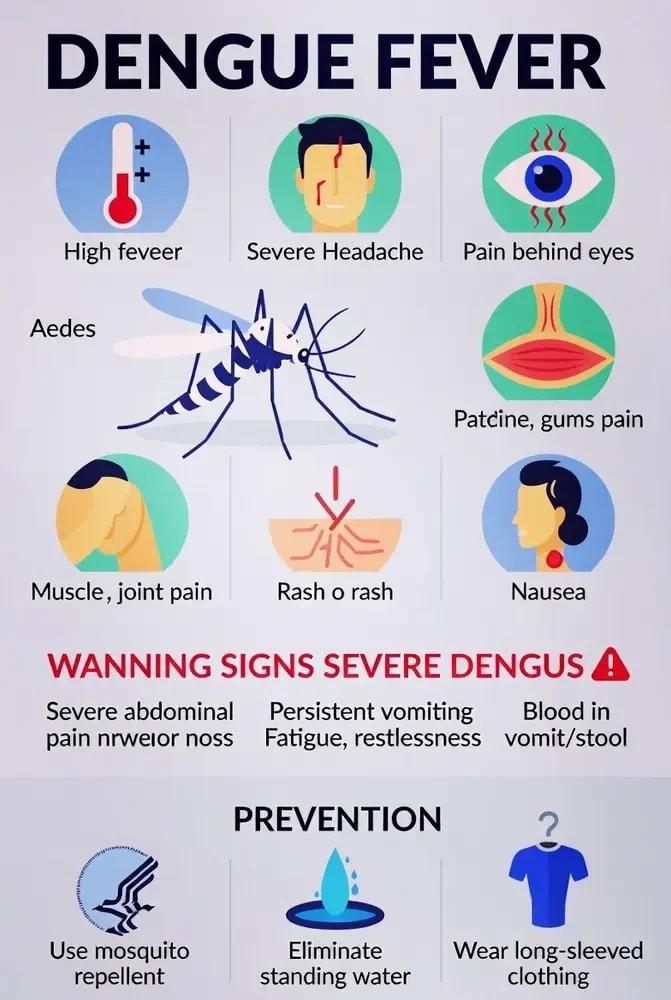
(Aedes mosquitoes transmit the dengue virus. They bite during the daytime and breed in standing water)
Symptoms and Causes
Symptoms of dengue
Dengue infections can cause no symptoms, mild symptoms, or very severe symptoms. Initial symptoms usually start 4–10 days after a mosquito bite. Common symptoms include:
- High fever (up to 104°F / 40°C)
- Severe headache
- Pain behind the eyes
- Muscle, bone, and joint pain (often called “breakbone fever”)
- Nausea or vomiting
- Swollen lymph nodes
- Rash (may appear a few days after fever starts)
Symptoms of severe dengue usually begin a few hours to a few days after the initial fever starts to improve. Warning signs include:
- Severe belly (abdominal) pain
- Persistent or frequent vomiting
- Vomiting blood or blood in stool
- Bleeding from the nose or gums
- Easy bruising or bleeding under the skin
- Extreme tiredness, restlessness, or irritability
- Difficulty breathing or signs of shock
Causes of dengue
Dengue is caused by four closely related dengue viruses (DENV). Here’s how it happens:
- An Aedes mosquito (usually Aedes aegypti) bites a person who has dengue and becomes infected with the virus.
- The infected mosquito then bites another person and passes the virus through its saliva.
- Once inside the body, the virus enters the bloodstream and multiplies.
- In some cases (especially with a second infection from a different dengue virus type), the immune system’s response can cause blood vessels to leak and platelet counts to drop.
- This combination can lead to internal bleeding, low blood pressure, and organ damage — the dangerous features of severe dengue.
How does it spread?
Dengue spreads mainly through the bite of infected Aedes mosquitoes. These mosquitoes bite during the day and often live around homes in urban and suburban areas. Dengue is not contagious from person to person like the flu, though a pregnant person can rarely pass it to their baby during pregnancy or childbirth.
Risk factors
People at higher risk include:
- Those living in or traveling to tropical/subtropical areas where dengue is common
- Children and older adults (over 65)
- People who have had dengue before (second infections are more likely to be severe)
Diagnosis and Tests
Healthcare providers usually diagnose dengue based on your symptoms, recent travel or exposure history, and a blood test. The blood test can detect the virus or antibodies and sometimes identify which of the four dengue virus types is involved. Tests may also rule out other illnesses with similar symptoms.
Management and Treatment
There is no specific antiviral medicine that cures dengue. Treatment focuses on relieving symptoms and preventing complications.
For mild dengue, care at home usually includes:
- Plenty of rest
- Drinking lots of fluids (water, oral rehydration solutions) to stay hydrated
- Taking acetaminophen (such as paracetamol) for fever and pain
- Avoid aspirin, ibuprofen, or other NSAIDs — these can increase the risk of bleeding
If you develop warning signs of severe dengue, go to the hospital immediately. Severe cases may need:
- Close monitoring
- Intravenous (IV) fluids
- Blood transfusion (in rare cases)
Most people with mild dengue recover in 3–7 days with good supportive care.
Outlook / Prognosis
Most people recover fully from dengue fever without lasting problems, especially if treated early. Severe dengue can be life-threatening, but the risk of death drops dramatically with prompt hospital care.
You can get dengue more than once because there are four different virus types. A second infection with a different type often carries a higher risk of severe disease.
Prevention
The best way to prevent dengue is to avoid mosquito bites. Helpful steps include:
- Use insect repellent containing DEET, picaridin, or other EPA-registered ingredients
- Wear long-sleeved shirts and long pants, especially during the day
- Use screens on windows and doors; repair any holes
- Eliminate standing water around your home (in buckets, flowerpots, tires, etc.) where mosquitoes breed
- Sleep under a mosquito net if needed
- In areas with ongoing outbreaks, follow local public health advice
A dengue vaccine is available in some countries for people who have previously had dengue, but it is not recommended for everyone. Check with your doctor or local health authority for the latest guidance.
Sources: Information adapted from World Health Organization (WHO) Dengue and Severe Dengue Fact Sheet and U.S. Centers for Disease Control and Prevention (CDC) Dengue resources.