
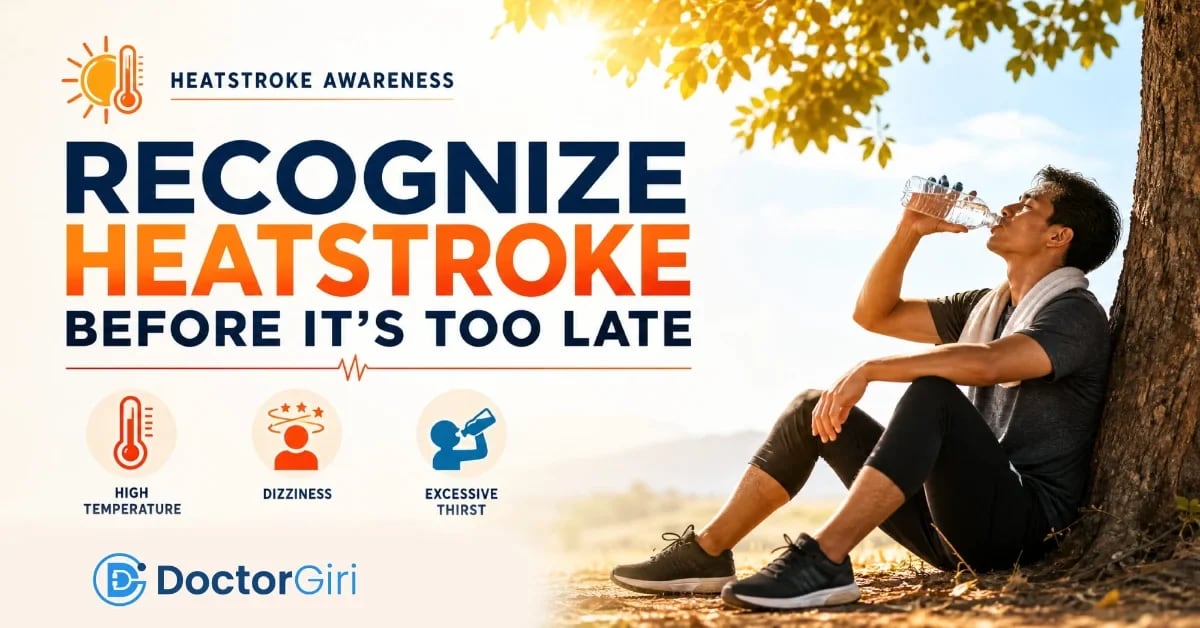
Heatstroke
Heatstroke is the most severe form of heat-related illness. It occurs when your body overheats and cannot cool itself, causing core body temperature to rise rapidly (usually above 104°F / 40°C). Heatstroke is a medical emergency that can damage the brain, heart, kidneys, and other organs.
If you or someone nearby shows signs of heatstroke, call emergency services immediately.
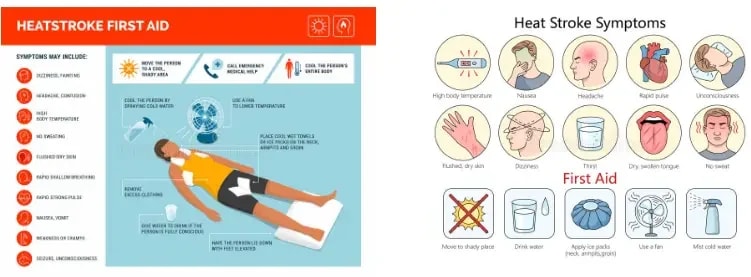
(These images illustrate common heatstroke symptoms and first-aid steps.)
Symptoms and Causes
Symptoms of heatstroke
Heatstroke symptoms develop quickly and require urgent action. Common signs include:
- Very high body temperature (104°F / 40°C or higher)
- Confusion, agitation, slurred speech, or altered mental state
- Dizziness, fainting, or loss of consciousness
- Hot, red, dry skin (may stop sweating in classic heatstroke) or heavy sweating (in exertional heatstroke)
- Rapid heartbeat and breathing
- Headache, nausea, or vomiting
- Seizures
Causes of heatstroke
Heatstroke happens when the body’s cooling mechanisms are overwhelmed. Key factors include:
- Prolonged exposure to high temperatures and humidity
- Strenuous physical activity in hot conditions (exertional heatstroke)
- Dehydration, which reduces the body’s ability to sweat and cool down
- Certain medications, alcohol use, obesity, or lack of air conditioning
- Poor acclimatization to hot environments
There are two main types: classic (non-exertional, common in older adults during heat waves) and exertional (during intense activity).
Risk factors
Higher risk groups include older adults, young children, people with chronic illnesses, outdoor workers, and athletes.
Diagnosis and Tests
Diagnosis is based on symptoms, measured body temperature, and recent heat exposure. In hospital settings, doctors may run tests to check for organ damage.
Management and Treatment
Heatstroke requires immediate emergency care. While waiting for help:
- Move the person to a cool, shaded area
- Remove excess clothing
- Cool the body rapidly with cold water, wet towels, ice packs (especially on neck, armpits, and groin), or fans
- Do not give fluids if the person is unconscious or confused
Hospital treatment includes IV fluids, continued cooling, and monitoring of vital organs.
Outlook / Prognosis
With prompt treatment, many people recover fully. However, delays can lead to permanent organ damage or death. Recovery time varies depending on severity and how quickly cooling begins.
Prevention
Prevent heatstroke by:
- Staying hydrated — drink plenty of water
- Avoiding strenuous activity during the hottest parts of the day
- Wearing lightweight, loose-fitting clothing and using sunscreen
- Never leaving children or pets in parked cars
- Using air conditioning or fans and taking breaks in cool areas
- Gradually acclimating to hot weather if working or exercising outdoors
Sources: Information adapted from World Health Organization (WHO) resources on heat and health and U.S. Centers for Disease Control and Prevention (CDC) heat-related illnesses guidance.